
A well-crafted floral arrangement isn’t just an embellishment—it’s an orchestrated infusion of vibrancy, character, and energy into a space. Whether it’s the rhythmic flow of cascading amaranthus or the structured elegance of tightly clustered ranunculus, florals create movement, soften architectural rigidity, and introduce an ever-changing focal point that breathes new life into interiors.
Color Theory in Floral Design
The selection of flowers isn’t merely about aesthetics—it’s grounded in precise color theory and psychological impact. High-impact warm hues, such as fiery pincushions (Leucospermum cordifolium), ignite spaces with enthusiasm, while soft, pastel tones like lisianthus (Eustoma grandiflorum) evoke serenity. The interplay of complementary tones—deep burgundy astrantias juxtaposed against crisp white phlox—creates visual dynamism, ensuring that the arrangement doesn’t just exist but interacts with its environment.
Structural Composition & Textural Balance
A florist’s expertise lies in mastering the technique of balance. A well-executed asymmetrical design featuring tropical Heliconia achieves movement and drama, contrasting beautifully against the tight, structural compactness of hybrid roses. The airy elegance of Gypsophila paniculata (baby’s breath) enhances spatial perception, making even small arrangements feel expansive. Incorporating Salal leaves strategically allows depth enhancement, framing the bouquet while guiding the eye naturally across the arrangement.
The Role of Seasonal Selections
Every flower carries an innate seasonality that dictates the ambiance it conveys. The rich autumnal tones of Dahlia pinnata imbue a space with warmth and sophistication, while spring’s delicate cherry blossoms (Prunus serrulata) bring ephemeral beauty symbolic of renewal. An expert floral designer adapts to the cyclical nature of blooms, ensuring seamless integration with environmental shifts, much like an artist altering their palette to suit light and mood.
Impact Beyond Aesthetics
Beyond mere decoration, floral compositions hold transformative power. The structural presence of Protea cynaroides (king protea) commands attention, asserting itself as an architectural statement. Meanwhile, fragrant tuberose (Polianthes tuberosa) subtly influences mood through olfactory engagement, stimulating relaxation and positive emotional response.
Your Floral Selection Today
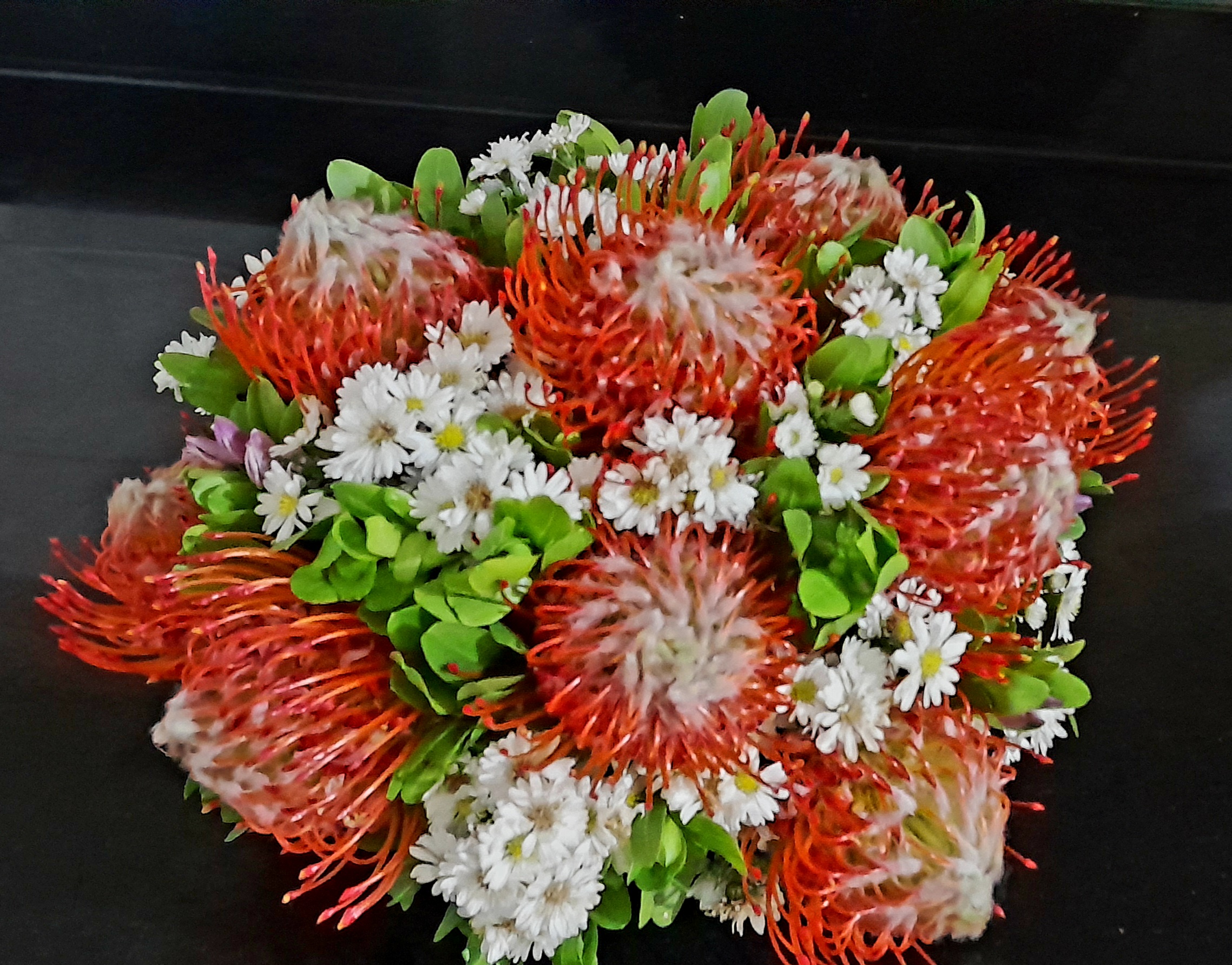
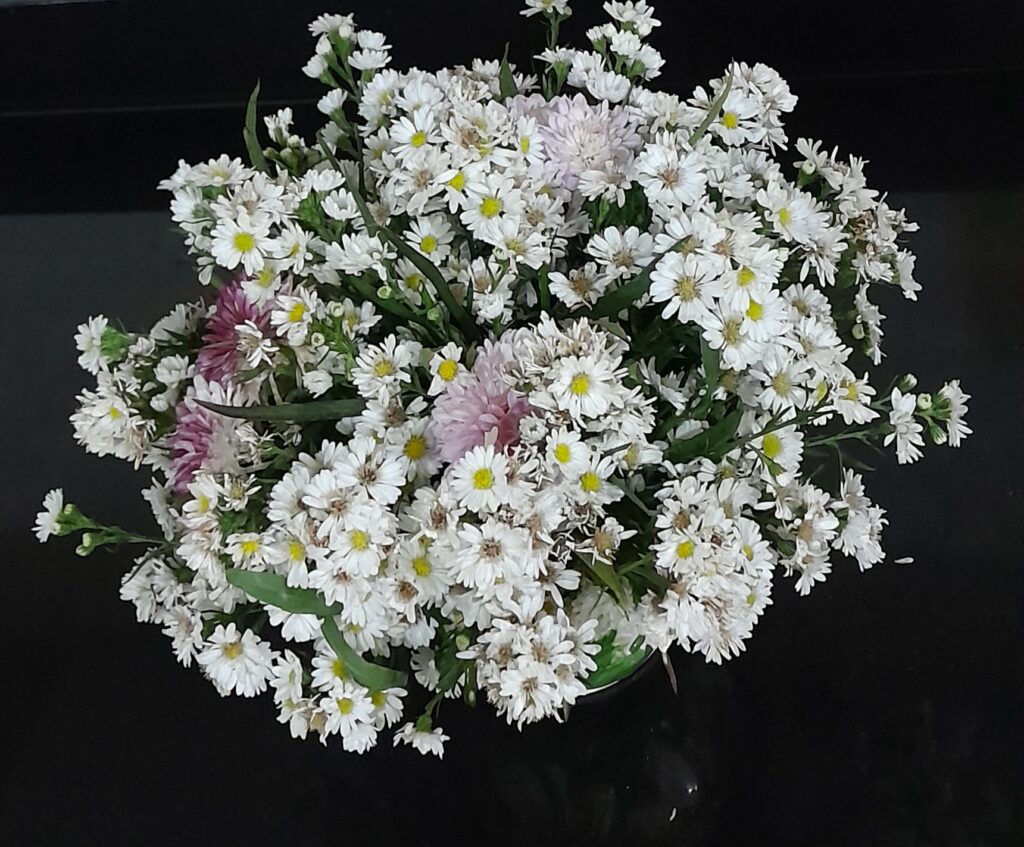
Analyzing the bouquet you’ve shared, the inclusion of striking red and orange pincushions provides undeniable energy and personality, contrasted with the softness of daisy-like blooms, adding dimension. The lush greenery introduces grounding elements—an essential aspect of floral storytelling. This arrangement would be well-suited for energizing reception areas or open-plan workspaces where vitality is key.
Floral design transcends simple decoration—it is an expressive art form that speaks a silent yet profound language. Whether through color, texture, or structure, flowers redefine the atmosphere, ensuring that any space they grace is not simply occupied but alive.
Now, for the flower arrangement names:
- Fiery Elegance – A dynamic combination of warm pincushions and structured greenery, radiating bold sophistication.
- Whispering Blooms – A delicate yet striking arrangement that balances softness with a commanding presence, perfect for uplifting any space.